
Home Sleep Test: How It Works and Who Should Use One
If you think you might have sleep apnea, the next question is usually the same: How do I get tested?
For many people, the idea of spending a night in a sleep lab feels inconvenient, unfamiliar, or intimidating. The good news is that sleep apnea testing has evolved significantly in recent years.
Today, many patients can be evaluated using a home sleep test, allowing them to assess their sleep in a familiar, comfortable environment.
Understanding how these tests work—and whether they’re right for you—is the first step toward better sleep and better health.
If you're not sure whether testing is necessary, it’s helpful to first understand the common signs of sleep apnea, including snoring, fatigue, and disrupted sleep.
What Is a Home Sleep Test?
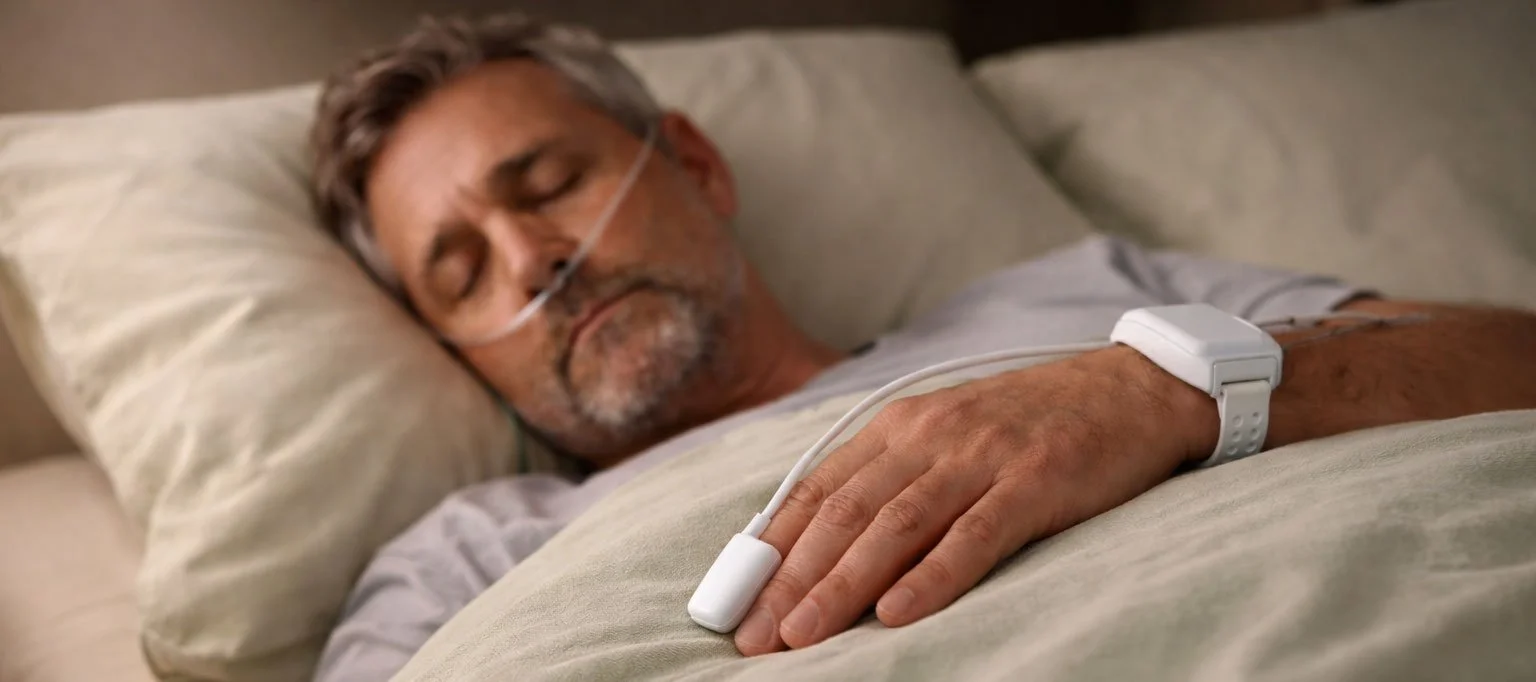
A home sleep test (HST) is a diagnostic tool used to evaluate breathing patterns during sleep. Instead of staying overnight in a sleep lab, you use a portable device in your own bed.
These devices are designed to detect obstructive sleep apnea (OSA) by monitoring key indicators such as airflow, breathing effort, and oxygen levels.
While they don’t capture as much data as a full in-lab sleep study, they are highly effective for diagnosing moderate to severe obstructive sleep apnea in many patients.
If you're still unsure whether your symptoms point to sleep apnea, a quick screening can help clarify your risk level. You can use our Sleep Apnea Screener.
Why Home Testing Is Becoming More Common
In the past, sleep apnea diagnosis almost always required an overnight stay in a sleep lab. While still valuable in certain cases, this approach isn’t always necessary.
Home sleep testing has become more widely used because it offers several advantages:
Greater convenience
Faster access to testing
More natural sleep conditions
Reduced cost compared to in-lab studies
For many patients, being able to sleep in their own bed leads to a more typical night of sleep, which can provide useful diagnostic insight.
Who Should Consider a Home Sleep Test
A home sleep apnea test may be appropriate if you are experiencing symptoms such as:
Loud or frequent snoring
Daytime fatigue or sleepiness
Waking up gasping or choking
Morning headaches
Difficulty concentrating
These symptoms are often early indicators of sleep apnea, even if they seem mild at first. If you’re unsure, review the full breakdown of sleep apnea symptoms.
How Home Sleep Tests Work
Home sleep tests are designed to collect key data while you sleep, using a small number of sensors.
What the Device Measures
Most home sleep tests track:
Airflow through the nose
Breathing effort
Blood oxygen levels
Heart rate
Snoring patterns
These measurements help determine whether breathing interruptions are occurring during sleep.
What the Equipment Looks Like
Depending on the device, you may wear:
A small nasal cannula to measure airflow
A finger sensor to monitor oxygen levels
A chest belt to track breathing effort
The setup is designed to be simple and minimally disruptive.
Step-by-Step: Taking a Home Sleep Test
For many patients, the process is straightforward.
1. Receive the Device
You may receive the device by mail or pick it up from a provider.
2. Set Up Before Bed
Attach the sensors according to the instructions provided.
3. Sleep Normally
Go to sleep as you normally would. The device records data throughout the night.
4. Return the Device
After the test, the device is returned or transmitted for analysis.
5. Review Results
A sleep specialist reviews the data to determine whether sleep apnea is present.
How Accurate Are Home Sleep Tests?
Home sleep apnea tests are considered clinically reliable for many patients, especially those with a high likelihood of moderate to severe obstructive sleep apnea. However, they do have limitations.
Because they focus primarily on breathing-related data, they may not detect:
Certain mild cases
Other sleep disorders (such as insomnia or narcolepsy)
Brain activity or sleep stages
If results are inconclusive, a physician may recommend further testing.
Home Sleep Test vs Sleep Lab Study
Both testing methods can diagnose sleep apnea, but they differ in scope and experience.
Home Sleep Test
Conducted in your own bed
Fewer sensors
More convenient
Faster access
Sleep Lab Study
Conducted in a clinical setting
Monitors brain activity and sleep stages
Used for more complex cases
For many patients with suspected obstructive sleep apnea, a home sleep test is a practical and effective starting point.
Benefits of Testing at Home
For patients, the advantages of home testing are often significant. You can:
Sleep in a familiar environment
Avoid overnight clinic visits
Complete testing more quickly
Begin treatment sooner if needed
These factors can reduce barriers to diagnosis and help patients move forward with care more efficiently.
What Happens After the Test
Once your test is complete, the data is reviewed by a sleep specialist.
If sleep apnea is diagnosed, the next step is to determine the most appropriate treatment plan. This may include:
CPAP therapy
Oral appliance therapy
Lifestyle adjustments
Early diagnosis allows treatment to begin sooner, which can significantly improve sleep quality and overall health.
Why Early Diagnosis Matters
Sleep apnea is not just a sleep issue—it can affect multiple systems in the body.
Untreated sleep apnea has been linked to:
High blood pressure
Heart disease
Stroke
Diabetes
Cognitive decline
Identifying and treating sleep apnea early can help reduce these risks and improve daily functioning.
Frequently Asked Questions
How accurate is a home sleep apnea test?
Home sleep tests are highly effective for diagnosing moderate to severe obstructive sleep apnea, especially when symptoms are present.
How long does a home sleep test take?
Most tests are completed in a single night, though the full process (including analysis) may take several days.
Is a home sleep test covered by insurance?
Many insurance plans cover home sleep testing when it is medically appropriate, though coverage varies.
Take the Next Step Toward Better Sleep
If you’re experiencing symptoms like snoring, fatigue, or disrupted sleep, the most important step is understanding your risk.
The good news: there’s a simple screening tool used by sleep health experts that can help determine whether you may have sleep apnea.
This content is for informational purposes only and should not be considered medical advice. Please consult a qualified healthcare provider for diagnosis and treatment decisions.