
How to Test for Sleep Apnea at Home
If you think you might have sleep apnea, one of the first questions is: How do I actually get tested?
For many people, the idea of a sleep lab can feel inconvenient or intimidating. The good news is that testing has become much more accessible.
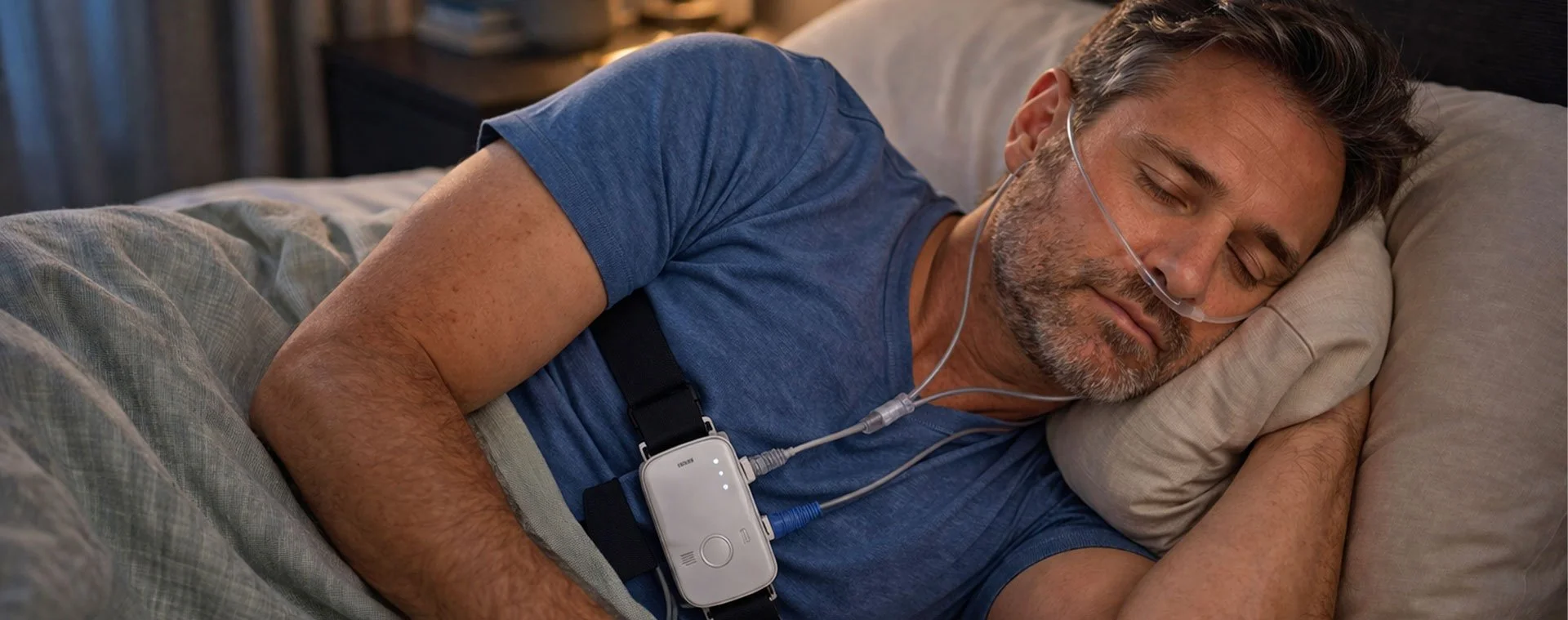
Today, many patients can evaluate their sleep using a home sleep test, which allows you to collect important data from the comfort of your own bed.
Understanding how this process works—and whether it’s right for you—can help you take the next step with confidence.
What Is a Home Sleep Apnea Test?
A home sleep apnea test is a portable diagnostic tool used to monitor your breathing while you sleep.
Unlike a traditional sleep study conducted in a lab, this test is done at home using a compact device.
It is designed to identify obstructive sleep apnea (OSA) by measuring patterns such as:
Airflow
Breathing effort
Oxygen levels
If you’re unsure whether sleep apnea could be affecting you, it can help to review the most common symptoms first.
Who Should Take a Home Sleep Test
Home sleep testing is often recommended for people who:
Snore regularly
Feel tired during the day
Wake up gasping or choking
Have been told they stop breathing during sleep
These symptoms may suggest disrupted breathing during sleep—even if they seem mild.
Not sure where you fall? Start with a quick screening.
How the Test Works
A home sleep apnea test collects data while you sleep using a small number of sensors.
Breathing Monitoring
The device tracks airflow through your nose to detect interruptions in breathing.
Oxygen Monitoring
A sensor placed on your finger measures oxygen levels throughout the night.
Breathing Effort
A chest band may be used to track how your body is working to breathe.
Together, these measurements help identify patterns that indicate sleep apnea.
Step-by-Step: Taking a Home Sleep Test
The process is designed to be simple and easy to follow.
1. Receive the Test Kit
The device is typically shipped to your home or picked up from a provider.
2. Set Up Before Bed
You’ll attach the sensors using clear instructions. Most setups take only a few minutes.
3. Sleep as You Normally Would
The goal is to capture a typical night of sleep, so you can follow your usual routine.
4. Return or Upload the Data
After the test, the device is returned or the data is transmitted for analysis.
5. Review Your Results
A sleep specialist reviews the data to determine whether sleep apnea is present.
How Accurate Are Home Sleep Tests?
Home sleep tests are considered reliable for diagnosing moderate to severe obstructive sleep apnea.
They are widely used as a first step in evaluation, especially when symptoms are present.
However, they do have limitations.
Because they focus primarily on breathing, they may not detect:
Mild cases
Other sleep disorders
Detailed sleep stages
If results are unclear, additional testing may be recommended.
Benefits of Testing at Home
For many patients, testing at home removes barriers that might otherwise delay diagnosis.
Convenience
You can complete the test without traveling to a clinic.
Comfort
Sleeping in your own bed often leads to a more natural sleep pattern.
Faster Access to Care
Home testing can shorten the time between symptoms and diagnosis.
When a Sleep Lab May Be Needed
While home testing works well for many people, it’s not always the right option.
A sleep lab study may be recommended if:
Symptoms are complex
Other sleep disorders are suspected
Initial test results are inconclusive
Sleep labs provide more detailed data, including brain activity and sleep stages.
What Happens After Diagnosis
If your results indicate sleep apnea, the next step is determining the right treatment.
Common options include:
CPAP therapy
Oral appliances
Lifestyle changes
If you’re hesitant about CPAP, there are alternative approaches available.
Treating sleep apnea can lead to improvements in sleep quality, energy levels, and overall health.
Why Early Testing Matters
Sleep apnea often goes undiagnosed, even when symptoms are present.
Over time, untreated sleep apnea can affect:
Energy and focus
Mood and daily functioning
Long-term health
Learn more about the impact of untreated sleep apnea.
Getting tested early allows you to address the issue before it worsens.
Frequently Asked Questions
Do I need a doctor to take a home sleep test?
In most cases, a healthcare provider will guide the testing process and interpret the results.
How long does the test take?
Most home sleep tests are completed in a single night.
Is it uncomfortable to wear the device?
The equipment is designed to be lightweight and minimally disruptive.
Take the Next Step Toward Better Sleep
If you’re experiencing symptoms like snoring, fatigue, or disrupted sleep, testing is the most important next step.
The good news: you can start by understanding your risk with a simple screening tool.
This content is for informational purposes only and should not be considered medical advice. Please consult a qualified healthcare provider for diagnosis and treatment decisions.