
Can Sleep Apnea Be Diagnosed Without a Sleep Lab?
If you’re considering getting tested for sleep apnea, you may be wondering:
Do I have to go to a sleep lab—or is there another way?
For many people, the idea of spending a night in a clinical setting can feel inconvenient or unfamiliar.
The good news is that, in many cases, sleep apnea can be evaluated without an overnight stay in a sleep lab.
Understanding your options can help you take the next step with confidence.
What a Sleep Lab Study Does
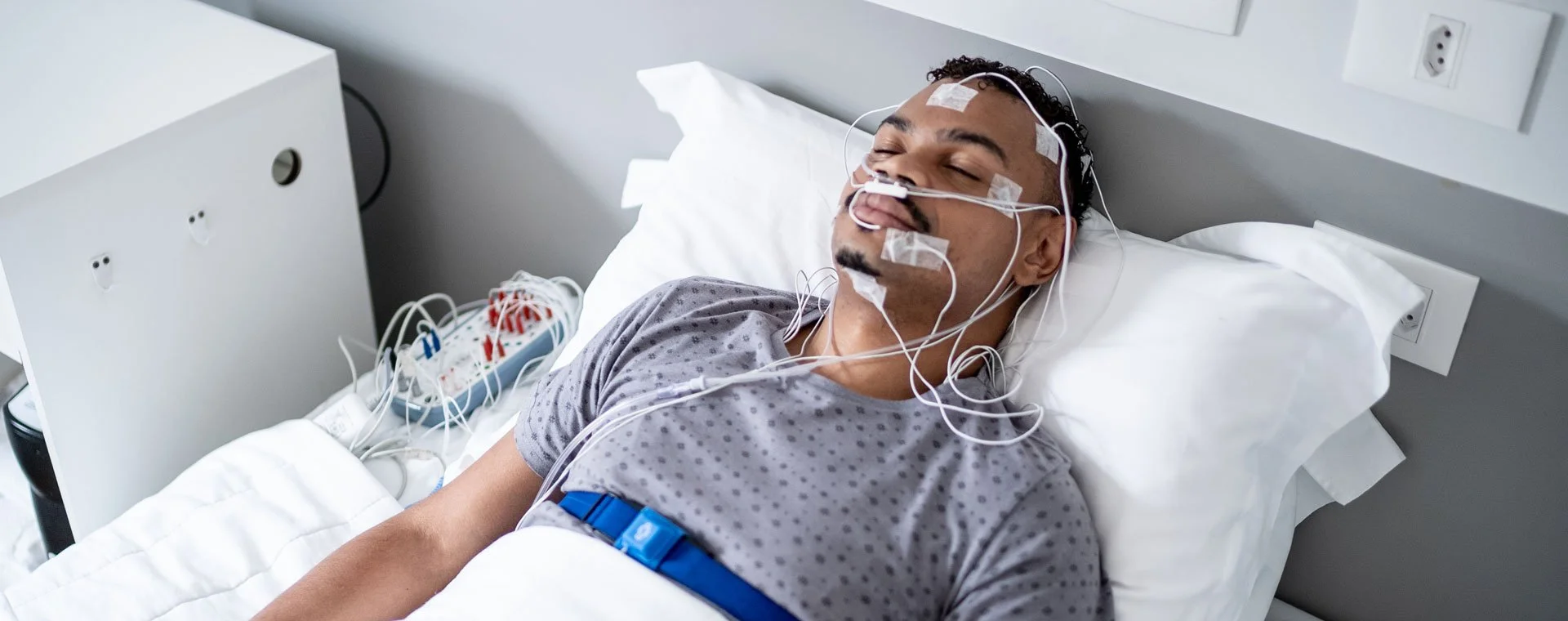
A sleep lab study—also called a polysomnography test—is conducted in a clinical setting where your sleep is monitored overnight.
It tracks a wide range of data, including:
Brain activity
Breathing patterns
Oxygen levels
Heart rate
Sleep stages
Because it collects detailed information, a sleep lab study can diagnose sleep apnea and other sleep disorders.
If you’re unsure what this process involves, see: What Happens During a Sleep Study
The Alternative: Home Sleep Apnea Testing
For many people, a home sleep apnea test is a practical alternative.
This type of test allows you to evaluate your sleep in your own bed using a portable device.
It typically measures:
Airflow
Breathing effort
Oxygen levels
Learn more about how it works here.
Home testing has become a widely used starting point for diagnosing obstructive sleep apnea.
How Home Testing Can Diagnose Sleep Apnea
Home sleep tests are specifically designed to detect patterns associated with obstructive sleep apnea.
They can identify:
Breathing interruptions
Drops in oxygen levels
Irregular breathing patterns
For many patients with clear symptoms, this information is enough to confirm a diagnosis.
When a Sleep Lab May Still Be Needed
While home testing works well in many cases, it’s not always the right fit.
A sleep lab study may be recommended if:
Symptoms are complex or unclear
Other sleep disorders are suspected
Medical conditions require closer monitoring
A home test does not provide clear results
Because sleep labs collect more detailed data, they can provide a more comprehensive evaluation when needed.
Home Testing vs Sleep Lab: What’s the Difference?
Both options are valid—they just serve different purposes.
Home Sleep Test
Conducted in your own bed
Focuses on breathing-related data
More convenient and accessible
Sleep Lab Study
Conducted in a clinical setting
Provides more detailed sleep data
Used for more complex evaluations
For a full comparison, see: Home Sleep Test vs Sleep Lab.
Who Is a Good Candidate for Home Testing?
Home testing is often appropriate if you:
Snore regularly
Feel tired during the day
Have been told you stop breathing during sleep
Are suspected of having obstructive sleep apnea
If these symptoms sound familiar, it may be worth taking the next step.
Not sure where you stand? Start with our quick sleep apnea screener.
Why Many People Start With a Home Test
For many patients, a home sleep test is the first step because it offers:
Convenience
No overnight stay or travel is required.
Comfort
You sleep in your own environment, which may reflect more natural sleep patterns.
Accessibility
Testing can often be completed more quickly.
If additional information is needed, further testing can always be done afterward.
What Happens After a Home Sleep Test
Once your test is complete, the data is reviewed by a sleep specialist.
If sleep apnea is diagnosed, treatment options may include:
CPAP therapy
Oral appliances
Lifestyle changes
If you’re concerned about CPAP, you can explore CPAP alternatives.
Why Diagnosis Matters
Sleep apnea often goes undiagnosed—even when symptoms are present.
Over time, untreated sleep apnea can affect:
Energy levels
Focus and productivity
Long-term health
Learn more about the risks of untreated sleep apnea.
Getting tested provides clarity and helps you take the next step toward improving your sleep.
Frequently Asked Questions
Can sleep apnea really be diagnosed at home?
Yes, in many cases. Home sleep tests are commonly used to diagnose obstructive sleep apnea.
Do I need to go to a sleep lab at all?
Not always. Many people begin with a home test and only use a sleep lab if additional evaluation is needed.
Is home testing accurate enough?
For many patients with typical symptoms, home testing provides reliable results.
Take the Next Step Toward Better Sleep
If you’re wondering whether you need a sleep lab—or if you can start at home—the first step is understanding your risk.
The good news: there’s a simple screening tool used by sleep health experts that can help.
This content is for informational purposes only and should not be considered medical advice. Please consult a qualified healthcare provider for diagnosis and treatment decisions.