
What Happens During a Sleep Study?
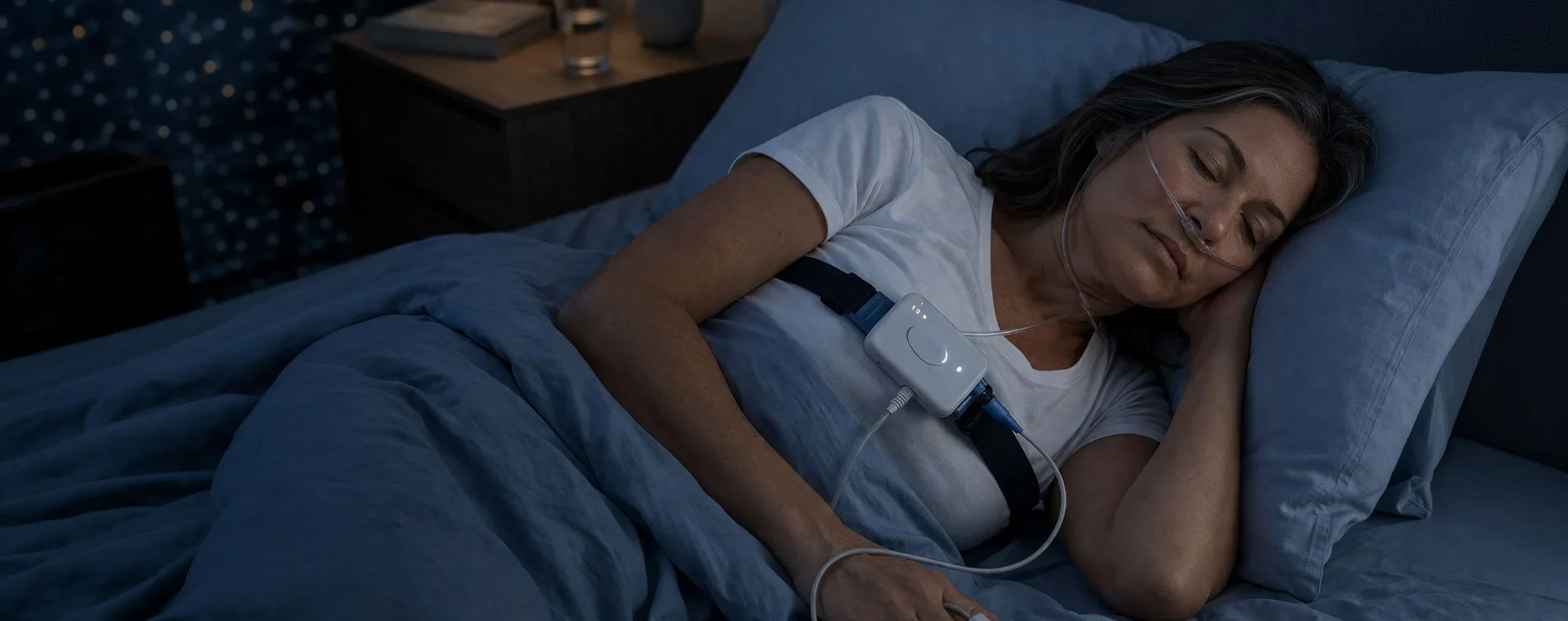
If you’ve been advised to get tested for sleep apnea, you might be wondering what actually happens during a sleep study.
For many people, the unknown is the biggest source of hesitation. Will it be uncomfortable? Will you be able to sleep? What exactly are they measuring?
The good news is that sleep studies are designed to be safe, straightforward, and as comfortable as possible.
Understanding what to expect can make the process feel much more approachable.
What a Sleep Study Measures
A sleep study is used to monitor how your body functions while you sleep.
Depending on the type of test, it may track:
Breathing patterns
Oxygen levels
Heart rate
Body movement
Sleep stages
These measurements help identify whether breathing disruptions—like sleep apnea—are occurring during the night.
If you’re not sure whether testing is necessary, it may help to first review the most common symptoms.
The Two Types of Sleep Studies
There are two main ways sleep studies are performed.
Home Sleep Apnea Test
A simplified test you complete in your own bed using a portable device.
In-Lab Sleep Study
An overnight test conducted in a sleep center, where multiple sensors monitor your sleep in more detail.
Preparing for a Sleep Study
Preparation is usually simple, but a few small steps can help ensure accurate results.
Follow Your Normal Routine
Try to keep your day as typical as possible so your sleep reflects a normal night.
Avoid Alcohol Before Bed
Alcohol can affect sleep patterns and breathing.
Limit Caffeine in the Afternoon and Evening
This can help ensure you’re able to fall asleep naturally.
Bring Comfortable Sleepwear (for lab studies)
If you’re staying overnight in a sleep center, wearing something familiar can help you relax.
What Happens During a Home Sleep Study
A home sleep test is designed to be simple and minimally disruptive.
Setting Up the Device
Before bed, you’ll attach a few small sensors, typically including:
A nasal cannula to measure airflow
A finger sensor to track oxygen levels
A chest band to monitor breathing effort
Sleeping as Usual
Once the device is set up, you simply go to sleep as you normally would.
Data Collection
The device records breathing patterns and oxygen levels throughout the night.
Returning the Device
After the test, you return the device or upload the data for analysis.
For a step-by-step walkthrough, see How to Test for Sleep Apnea at Home.
What Happens During an In-Lab Sleep Study
An in-lab study provides a more detailed evaluation of your sleep.
Arrival and Setup
You’ll arrive at the sleep center in the evening, where a technician will place sensors on your body.
These may include sensors on:
Your scalp (to measure brain activity)
Your chest (to track breathing)
Your finger (to monitor oxygen levels)
Sleeping in the Lab
You’ll sleep in a private room designed to be quiet and comfortable. While you are being monitored, the goal is still to allow you to sleep as naturally as possible.
Monitoring Throughout the Night
Technicians observe your data in another room and ensure everything is working properly.
Waking Up and Leaving
In the morning, the sensors are removed, and you can go home.
Will I Be Able to Sleep During the Test?
This is one of the most common concerns.
While sleeping in a new environment—or wearing sensors—may feel unfamiliar, most people are still able to sleep enough for the test to collect useful data.
Even a partial night of sleep can provide valuable information.
Is a Sleep Study Uncomfortable?
Sleep studies are designed to be as comfortable as possible.
Home Tests
Typically involve only a few lightweight sensors and are minimally intrusive.
In-Lab Studies
Include more sensors, but they are applied in a way that allows for movement and sleep.
Most patients find that the process is easier than they expected.
What Happens After the Study
Once your sleep study is complete, the data is reviewed by a sleep specialist.
They look for patterns such as:
Breathing interruptions
Oxygen level changes
Sleep disruptions
If sleep apnea is diagnosed, the next step is to determine the most appropriate treatment.
What Results Can Tell You
A sleep study can help answer important questions about your sleep.
It can determine:
Whether sleep apnea is present
How severe it may be
How often breathing interruptions occur
This information is used to guide treatment decisions.
Why Getting Tested Matters
Sleep apnea often goes undiagnosed, even when symptoms are present.
Over time, untreated sleep apnea can affect:
Energy levels
Focus and productivity
Long-term health
Learn more about the risks of untreated sleep apnea.
Testing provides clarity and helps you move forward with the right approach.
Frequently Asked Questions
How long does a sleep study take?
Most sleep studies are completed in a single night.
Do I need to stay overnight?
Only for in-lab studies. Home tests are completed in your own bed.
Will someone be watching me sleep?
In lab studies, technicians monitor data remotely—not visually in a disruptive way.
Take the Next Step Toward Better Sleep
If you’re considering a sleep study, the most important first step is understanding whether testing is needed.
The good news: there’s a simple screening tool used by sleep health experts that can help.
This content is for informational purposes only and should not be considered medical advice. Please consult a qualified healthcare provider for diagnosis and treatment decisions.